
Events on statistics and data analysis
In this article you wiil learn about upcoming events concerning statistics in the UK. Make sure you attend and participate in at least a few if you happen to be close-by.
Learn more Getstats
Statistics portal - free data, analysis and visualizations.
Climate change is a reality, no matter how many prominent figures insist on hiding their heads in the sand. This reality becomes clearer and more terrifying when seen in terms of hard and fast factual stats. In 2016, the earth's surface temperature was measured at around 0.94 Celsius degrees warmer than the average of the 20th century. The 21st century has thus broken historical temperature records, according to NASA and the NOAA.
More Climate Change Stats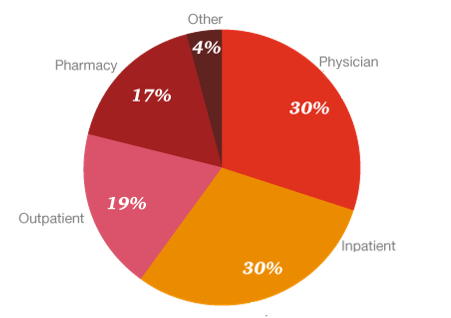
In the United Kingdom, the total expenditure on healthcare was ?125 billion in 2017/18, which is expected to rise over ?127 billion in 2017/18. Of the GDP, the UK spent 9.8% on health in 2014, according to data from the Organization for Economic Co-operation and Development (OECD). This is higher than the median for OECD member states but second lowest of the seven nations included in the G7, a situation that had remained constant since 2013, when United Kingdom health accounts were introduced. This is about the average expenditure of the other EU-15 countries, which spend about 9.7% on health.
More Health Stats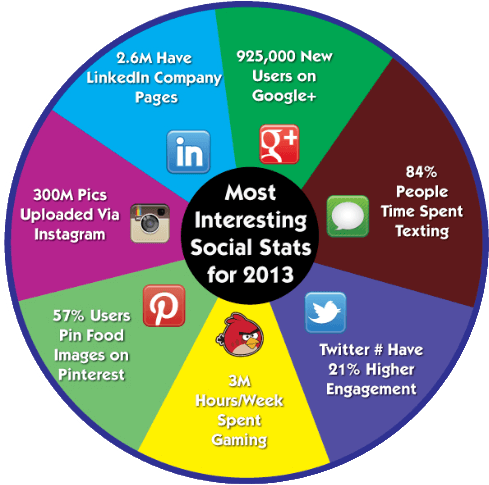
More than 42% of the global population of internet users are also social media users, which is around 3.196 billion people. Considering only Facebook, it is clear at what a quick pace this number must be growing. The company is reaching 2.2 billion monthly active users. Other social networking apps and sites are also at their all-time high in terms of users right now. In the United States, 7 out of 10 people are the owners of at least one social media account.
More Digital Marketing Stats
Gambling is and has always been an addictive sport for humankind. From times immemorial, great men and small, all have had a weakness for captivating games of luck that conjure or vanish money before their very eyes.
According to the gambling rates study, around 1.6 billion adventurous people gamble during any given year, with 4.2 billion having gambled at one time or another. Amongst the countries where gambling is most popular, be it of any kind-lotteries, sports betting or even horse racing- Great Britain takes first place, with the highest percentage of worldwide players under the age of 21. The total population of gamblers in the country is around 65%. Australians aren't far behind in this regard, with gambling losses per adult resident being around $990 in 2016, which is the highest in the world. China and Macau, though under a ban on land-based and online casinos, produce a significant gambling income of more than 50 billion dollars and expanding through state lotteries, sports betting and Mahjong.
More Betting Stats
My name is Jonathan Turner. I am 22 years old, born and brought up in Devonshire, United Kingdom. Currently, I am a student at Imperial College London where I am desperately endeavouring, through exotic dark magic, to complete my PhD in Statistics. I cannot say correctly as to when I, or my parents, realized my love for numbers and applications on society. I am always told stories of how I would sit glued to the television, or keep reading books, about facts and stats that I would then recite randomly to anyone who would listen. I have always had a good memory and a certain way with numbers that fascinated my primary school teachers to no extent.
More about meWhen large numbers need to be analysed, be it in an industrial, laboratory or social problem, this is where statistics come into play. Statistics is a branch of mathematics that deals with the collection of data and its subsequent organization, analysis, interpretation, and presentation. Studying statistical charts and graphs can sometimes be a little confusing, mostly due to the used terminology. For that purpose, here is a glossary of some of the most common words and phrases that one might encounter:
In this article you wiil learn about upcoming events concerning statistics in the UK. Make sure you attend and participate in at least a few if you happen to be close-by.
Learn more
Everything in this world has a history, even numbers and how we use them. Statistics in the UK has a long history that can be dated back to 1941 when the Central Statistical Office was established to improve the consistency of statistical data.
Learn moreDo you have any questions? Do you need a specific statistical study? Is there something wrong with our site? Feel free to contact us through the form below